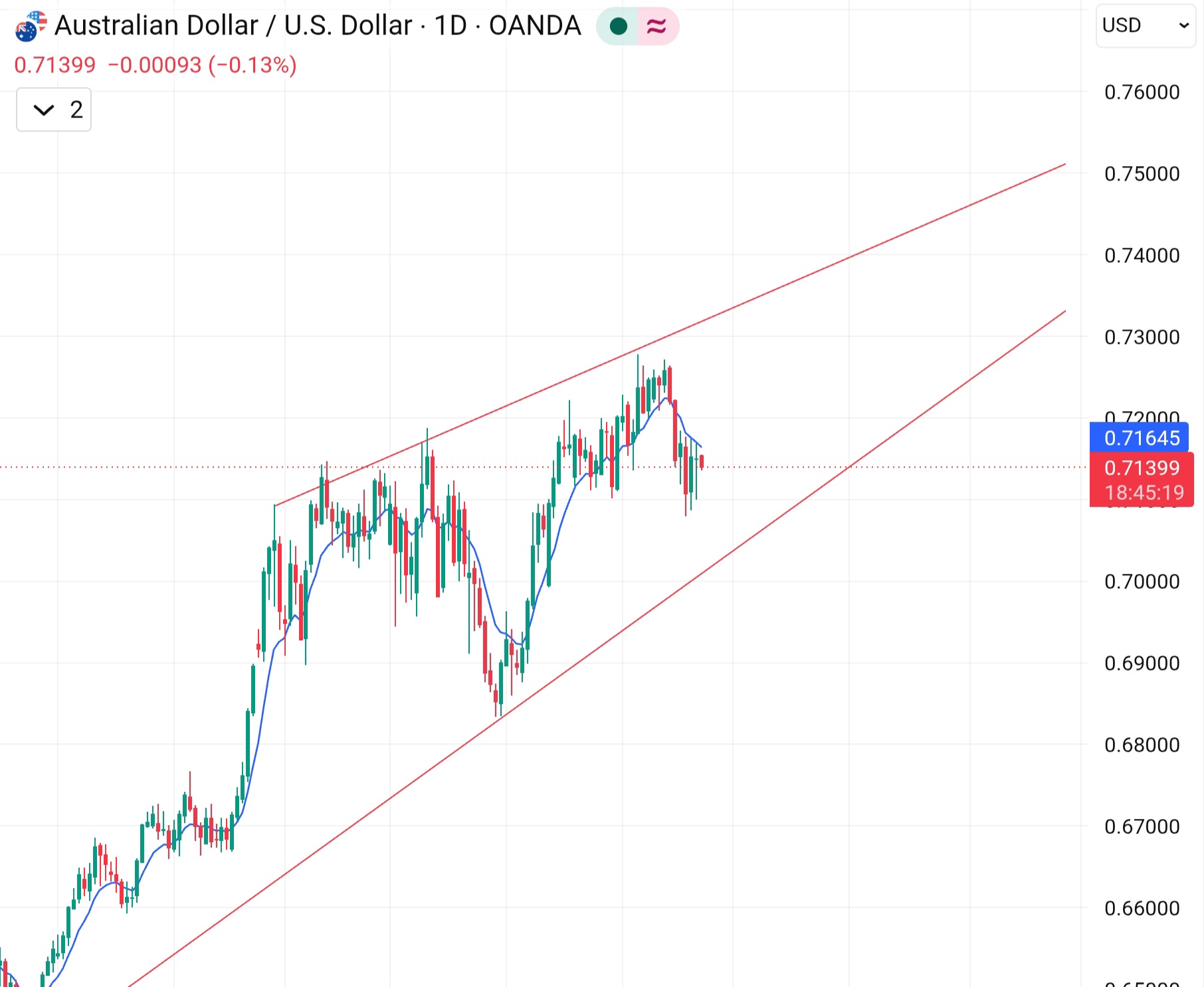
AUD/USD is holding modest gains today, but the underlying sentiment continues to lean bearish beneath the surface. Despite the pair pushing slightly higher over the past 24 hours, broader market positioning suggests traders are becoming increasingly cautious on the Australian dollar.
Current sentiment readings show AUD at 52 versus USD at 62, highlighting that the US dollar still maintains the stronger macro bias overall. At the same time, bearish divergence is beginning to emerge — price is rising, yet news sentiment around the Australian dollar has started to weaken. This creates a possible “fade-the-rally” environment where upside momentum may struggle to sustain itself unless fresh bullish catalysts appear.
The main driver behind AUD/USD remains the widening contrast between Federal Reserve and Reserve Bank of Australia expectations. Sticky US inflation continues to delay aggressive Fed rate-cut hopes, keeping US yields elevated and supporting the dollar. Meanwhile, softer Australian economic conditions and slower consumer activity have increased speculation that the RBA may eventually lean more dovish later in the cycle.
This divergence continues to favour USD strength on rallies.
From a broader market perspective, AUD/USD also remains heavily tied to global risk appetite. Equity markets staying stable has helped prevent aggressive downside selling for now, but traders are still reluctant to commit strongly to AUD upside while concerns around global growth and China demand linger in the background.
Technically, the pair remains in a neutral-to-bearish structure short term. Buyers still have some control above immediate support zones, but momentum appears increasingly fragile as institutional flows continue favouring the US dollar. If upcoming US inflation or labour data surprises to the upside again, AUD/USD could quickly rotate lower as dollar demand accelerates.
For now, the bias remains cautiously bearish while price action stays vulnerable to a pullback after the recent rise. Traders should closely monitor upcoming US PCE inflation data, Federal Reserve commentary, and any fresh signals from the RBA, as these will likely determine the pair’s next directional move.
From a technical perspective, AUD/USD remains within a broader bullish structure, although short-term price action is beginning to show signs of weakness. The pair is currently pulling back toward the 0.6990 region, which is acting as an important near-term support level.
As long as price holds above this support zone and respects the ascending trend line structure, the broader bullish outlook remains intact. However, a confirmed break below 0.6990 or a decisive move beneath the trend line could signal a shift in momentum, potentially opening the door for a deeper downside correction.
If bearish pressure accelerates following a breakdown, sellers may begin targeting lower support regions in the sessions ahead as market sentiment turns more defensive.